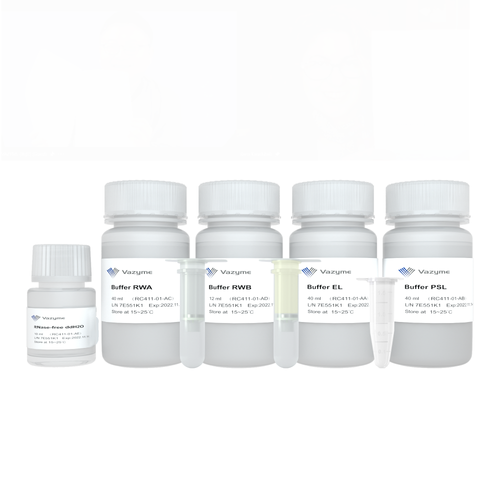
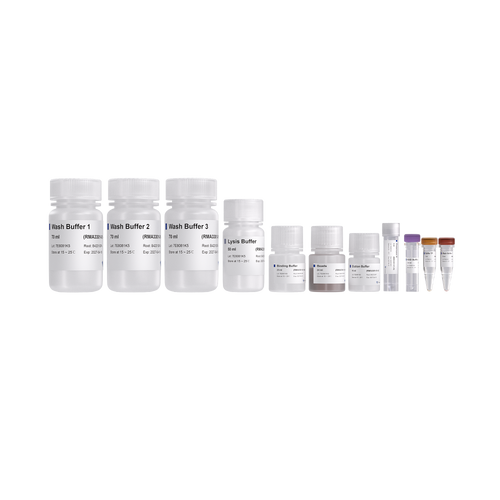
Product Description
This kit enables rapid, high-quality total RNA purification from animal tissues and cells using silica-membrane-based technology, eliminating the need for hazardous reagents like β-mercaptoethanol and phenol-chloroform.
The potent lysis activity of Buffer RL (when combined with Proteinase K) supports compatibility with complex samples and higher input amounts. FastPure columns efficiently remove contaminants and residual gDNA while enabling high-yield RNA binding. With optimized buffers, the resulting RNA is high-purity, free of carryover contaminants, and ready for use in RT-PCR, RT-qPCR, and microarray analysis.
Features
Robust performance on challenging samples: Handles high-protein, high-fiber, and high-fat tissues (muscle, cartilage, fish, adipose tissue) with consistent success rates
High-Purity RNA for reliable downstream use: Optimized lysis and wash steps eliminate contaminants, ensuring pure RNA for consistent results
All-in-One compatibility: Works with cells, common tissues, and complex samples to streamline lab workflows and reduce costs
Fast & safe protocol: Complete RNA extraction in 10 minutes with just two washes—no toxic reagents required
Performance
High Extraction Success Rate
Delivers reliable performance on challenging, difficult-to-lyse samples, with a single kit suitable for all common sample types. RNA was extracted from a variety of animal tissues and cell samples using Vazyme #RC122. Selected purified RNA products were analyzed by agarose gel electrophoresis. The results demonstrate that Vazyme #RC122 exhibits broad compatibility with a wide range of animal tissues and cell samples.
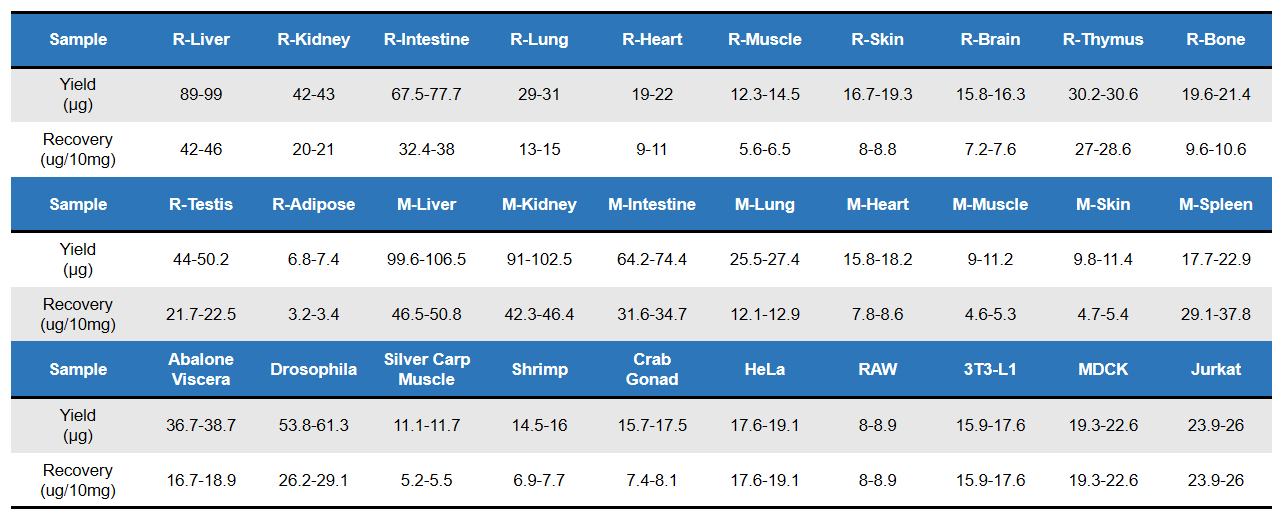
Table 1. RNA yield and recovery from various animal tissues and cell samples
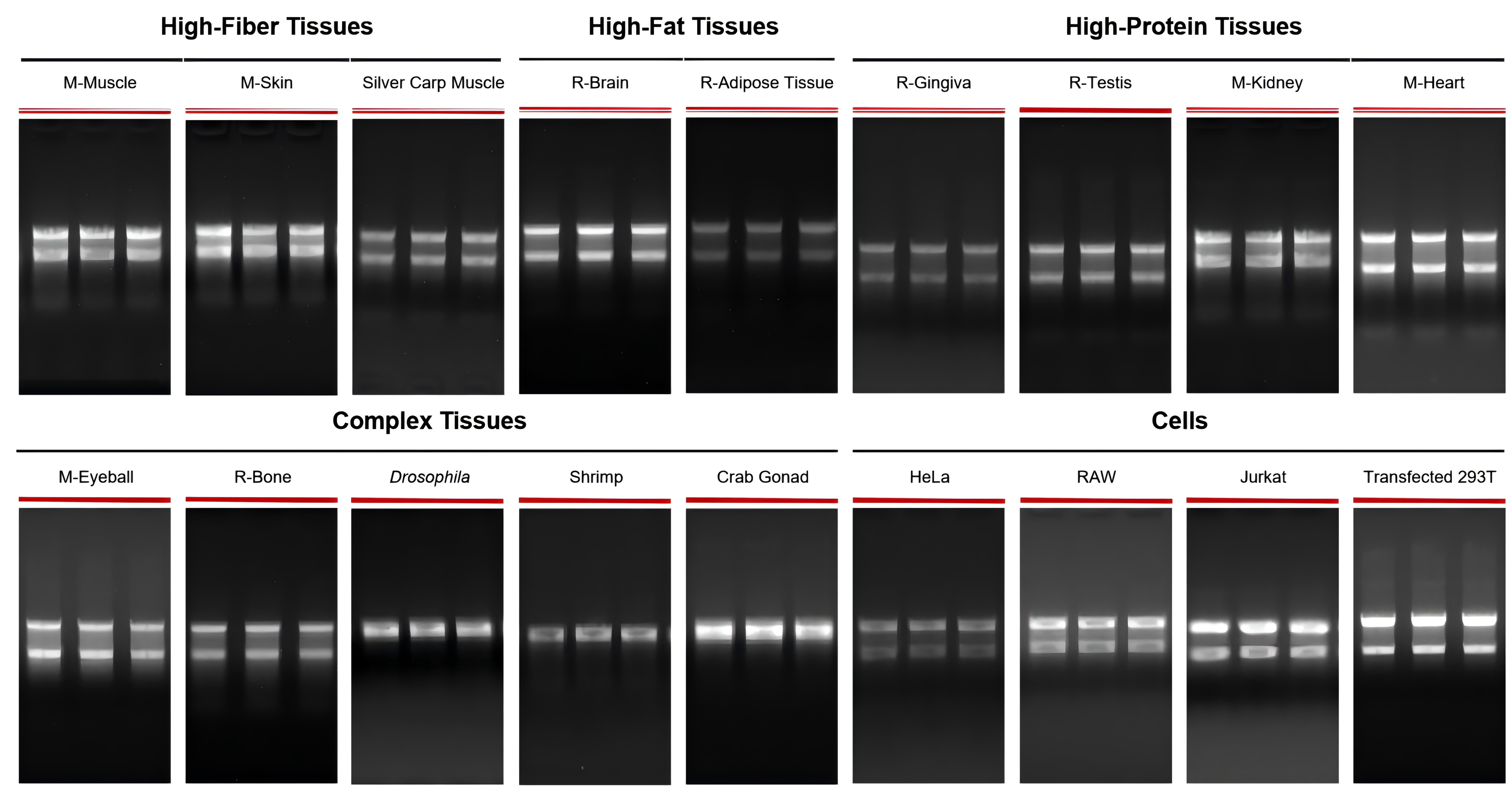
Figure 1. RNA integrity analysis by agarose gel electrophoresis
Reliable Performance for Downstream Applications: High Yield and Purity
Total RNA was isolated from various animal tissues and cell samples using Vazyme #RC122 and other commercially available total RNA extraction kits, following their respective protocols. The concentration and purity of the purified RNA were then evaluated. As shown in the results, RNA extracted with Vazyme #RC122 yields higher quantities compared to competing products. Additionally, the OD260/230 ratios of RNA isolated with Vazyme #RC122 are closer to the ideal range, indicating superior purity.
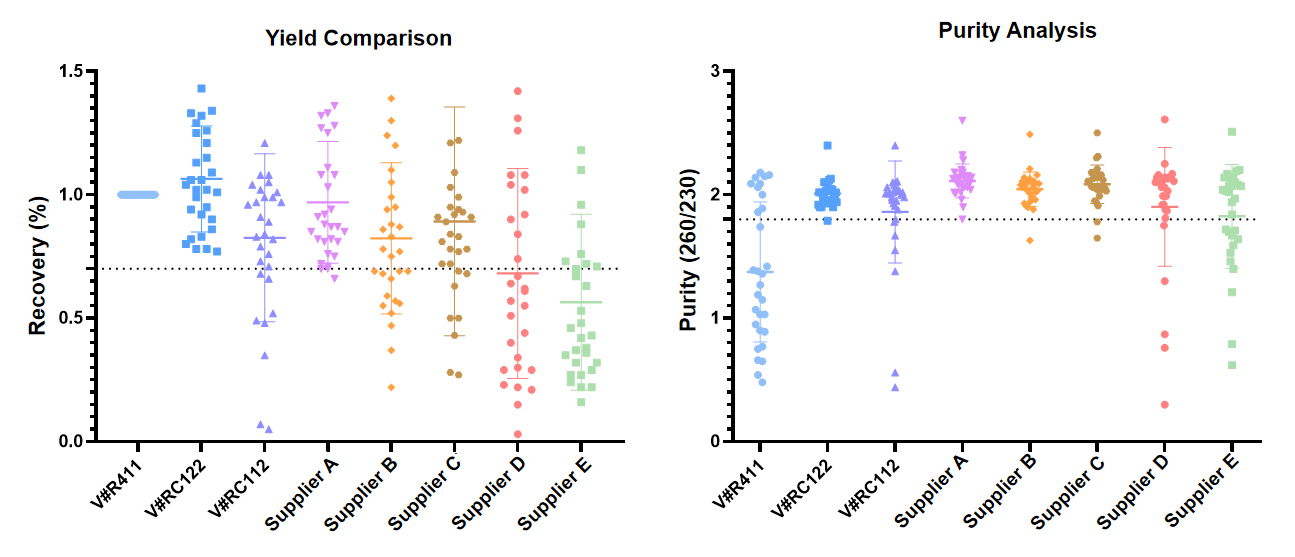
Figure 2. Comparison of RNA extraction performance across different kits/suppliers.
(Left) Statistical analysis of RNA extraction yield, shown as recovery percentage (%).
(Right) RNA purity analysis based on the 260/230 absorbance ratio.
Fast and Safe: Only Two Wash Steps Required
Total RNA can be extracted from various animal tissues and cells in just 10 minutes (the time indicated in the figure corresponds to lysis and centrifugation steps). No toxic reagents such as β-mercaptoethanol or phenol-chloroform are required, ensuring a safer laboratory workflow.
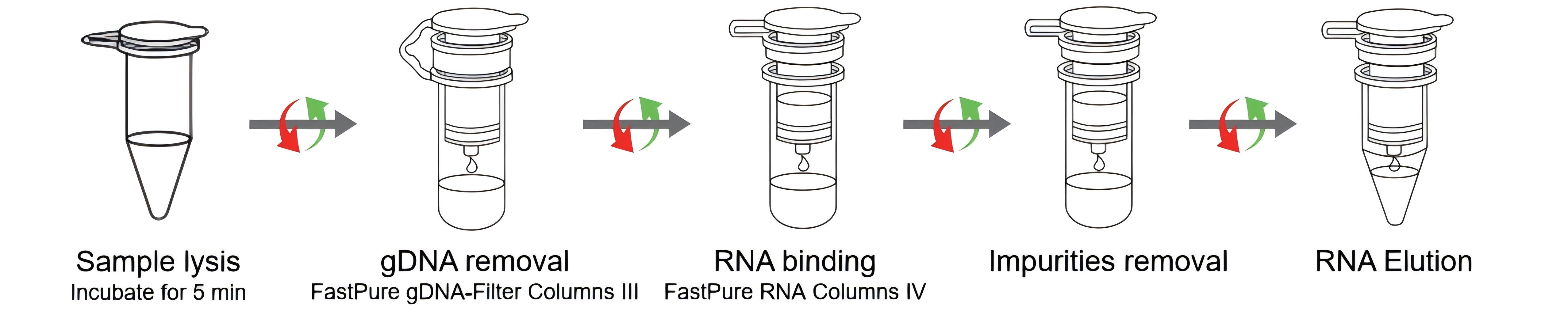
Figure 3. Workflow of the FastPure Cell/Tissue Total RNA Isolation Kit V3
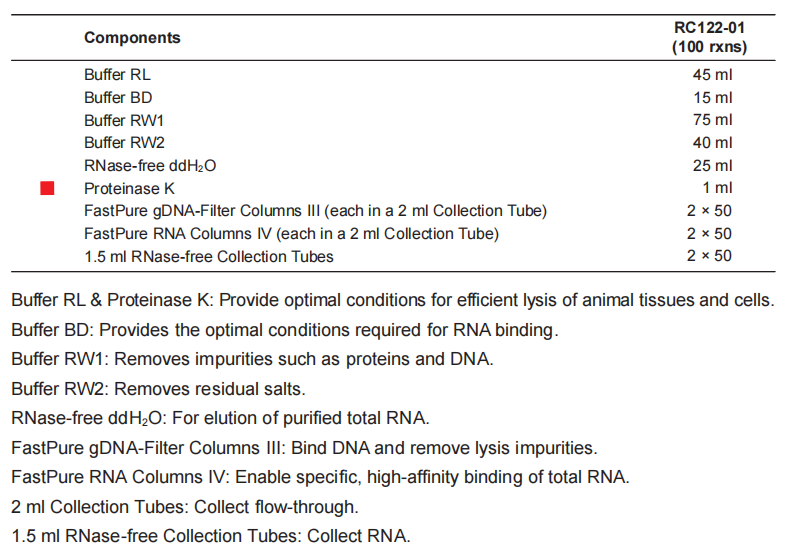
Components
Storage
Store at 15 ~ 25°C and transport at room temperature.
FAQS
Frequently Asked Questions1. What indicates that complete lysis has been achieved?Complete lysis is confirmed when the lysate contains no visible tissue or cell clumps. Follow these guidelines for optimal results: a. Liquid nitrogen-ground samples: After adding the ground powder to lysis buffer, vortex at maximum speed for 1–2 minutes. b. Mechanical homogenization: Use a tissue homogenizer at 60 Hz for 1–2 minutes to achieve a fully homogenized lysate. c. Adherent cells: Pipette the lysate up and down against the culture dish surface at least 20 times to ensure complete cell lysis. After lysis, incubate the sample at room temperature for 5 minutes to allow Proteinase K to function effectively.
2. Is centrifugation required after homogenization of the lysate?This depends on the lysate characteristics: a. Standard lysates: No centrifugation is required. Transfer the entire lysate directly to the gDNA-Filter Column. b. Lysates with excessive foam: Centrifuge at 12,000 rpm for 1–2 minutes to ensure complete recovery of the lysate. *Do not discard the foam, as it contains significant amounts of nucleic acid.
3. What should I do if the lysate clogs the gDNA-Filter Column?Troubleshoot column clogging using these steps: a. Increase centrifugation speed: Spin the column at 13,000 rpm for 1–2 minutes to force the lysate through the membrane. b. Reduce sample input: The recommended tissue input is 10–30 mg. For highly cellular tissues (e.g., spleen, thymus), do not exceed 10 mg. c. Improve lysis efficiency: Ensure the sample is fully homogenized. If large insoluble particles remain, centrifuge the lysate to remove debris, then transfer only the supernatant to the column